
News
From Radio Retail Reads to Natural Storytelling: Sarah’s Voiceover Journey
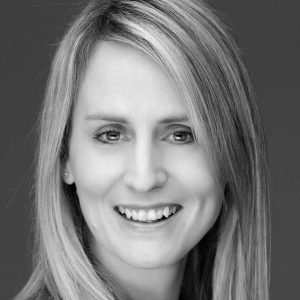 From Radio Retail Reads to Natural Storytelling: Sarah Parsons’ Voiceover Journey
There’s a particular kind of resilience that long-term voiceover artists develop. The industry changes, styles evolve, technology shifts — and somehow the people who truly love the craft keep adapting.
That adaptability was front and centre in a recent episode of The Voice Market Podcast, where veteran Australian voice artist Sarah Parsons sat down with host Kieron to talk about her path through radio, voiceover, teaching, and the changing sound of modern commercial reads.
What emerged was more than a career story. It was a conversation about performance, identity, creativity, and the challenge of learning to sound “natural” after years of being trained to do exactly the opposite.
Listen to the podcast here
A Career That Started Almost by Accident
Sarah’s introduction to radio came through a friend who spotted an advertisement for radio school in a newspaper and invited her along. What began as curiosity quickly became a profession.
After completing radio school in South Australia, Sarah returned home to Tasmania and landed a job in radio remarkably quickly. Like many broadcasters of the era, she wore multiple hats — announcer, music director, commercial reader — learning the technical and performance skills that would later become the backbone of her voiceover career.
There was also a surprising family connection. Both of Sarah’s grandfathers had worked in radio, one professionally across several Australian markets and another during wartime broadcasting in Tasmania.
It’s the kind of detail that makes you wonder whether some people are simply born for audio.
The Evolution of the Home Studio
Like many voice artists who began working remotely before home studios became standard, Sarah’s early setup was less than glamorous.
A walk-in wardrobe, piles of clothes, an old mattress for sound treatment, and a USB microphone formed the foundation of what would eventually become a professional studio operation.
Fifteen years later, the technology has improved dramatically — but the story highlights something important for aspiring voice talent: perfection isn’t required to begin.
Good performance and persistence matter more than expensive gear in the early stages.
The Challenge of “Unlearning” Radio
One of the most interesting moments in the podcast came when Sarah discussed transitioning away from traditional radio-style commercial delivery.
For years, the industry rewarded energetic, high-pressure retail reads: fast pacing, elevated energy, and strong sales delivery. It was a style many radio announcers mastered through repetition and necessity.
But modern advertising has changed.
Today’s clients often want conversational, authentic, understated performances — reads that sound more like real conversation than polished announcing.
For experienced broadcasters, that shift can be surprisingly difficult.
Sarah openly described how unnatural “natural” reads initially felt after spending years developing high-energy commercial technique. She explained that conversational delivery wasn’t something she could simply switch on; it required deliberate effort and retraining.
It’s a challenge many experienced voice artists quietly relate to.
The microphone itself can become psychological conditioning. Put the headphones on, step into the booth, and the brain automatically defaults into “performance mode.”
Why Voiceovers Sometimes Look Ridiculous
Anyone who has watched a voice actor record an energetic retail commercial knows the physicality involved can be surprisingly intense.
Sarah laughed about seeing a radio announcer years ago wildly gesturing in a studio booth and thinking something must have been wrong with him. Years later, she completely understood why.
Retail voiceover work often becomes a full-body performance.
Standing, arm movements, facial expression, posture, breathing — all of it affects delivery. Interestingly, Sarah noted that as conversational reads became more common, she found herself sitting more often during sessions because it encouraged a more relaxed, natural tone.
It’s a small detail, but one that reveals how deeply physical voice performance really is.
Advice for Copywriters: Read Scripts Out Loud
The podcast also offered valuable insight for copywriters and creative teams producing commercial scripts.
Sarah spoke candidly about scripts that simply don’t fit the allotted runtime — particularly high-energy retail copy crammed unrealistically into short durations.
Her advice was simple: Read scripts aloud before sending them to production.
What looks fine on paper often collapses once spoken naturally. Pacing, breath points, awkward phrasing, and timing issues become obvious immediately when a script is vocalised.
It’s straightforward advice, but it reflects a broader truth about audio production: voiceover is performance, not just text.
Bringing Performance Into the Classroom
Today, Sarah balances voiceover work with another career — primary school teaching.
Interestingly, the two disciplines overlap more than you might expect.
While teaching children to read, Sarah realised she was instinctively incorporating voiceover techniques into classroom exercises: changing emphasis, experimenting with tone, and encouraging expressive reading.
In many ways, it circles back to her original love of drama and performance.
Voiceover, after all, is acting. Even the simplest commercial script contains intention, emotion, rhythm, and storytelling.
A Craft Worth Sticking With
One of the strongest themes throughout the episode was longevity.
Sarah spoke honestly about the exhaustion that can come from balancing multiple careers and recording sessions after long workdays. But she also reflected on why she never fully stepped away from voiceover: because it’s a craft developed slowly over years of experience.
That perspective feels increasingly valuable in a fast-moving creative industry obsessed with shortcuts.
Great voice work rarely happens overnight. It’s built through repetition, experimentation, adaptation, and persistence.
And sometimes, it starts with a friend casually inviting you to radio school.